
DECODED: What is driving dynamics?
The three kinds of motion behind every drive, and the software that keeps them in sync.
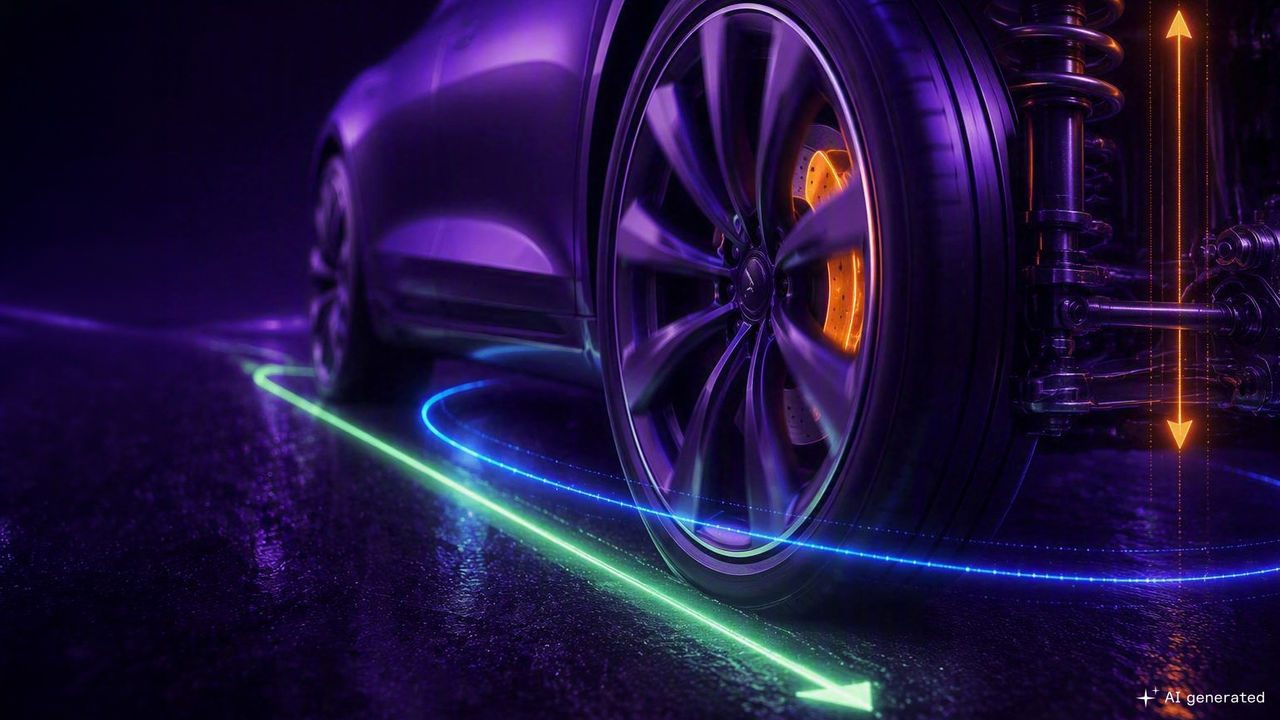
Picture a tight country road in light drizzle. The car accelerates out of the straight, stays composed through the corner, soaks up the bumps and eases off before the next bend. To the driver, it feels like one smooth motion.
Underneath, the software is managing three kinds of motion at once: forward and backward as you accelerate and brake, side to side as you corner, and up and down as the suspension works. These jobs used to sit in separate mechanical systems. Today, they are integrated into a single software system that can optimize their interaction in real time.
So why does software shape driving dynamics today?
More mechanical systems alone do not automatically make a car handle better. Accelerating, steering and suspension are tightly linked. Handle only one of them in isolation and you give up performance, stability and comfort. In the end, what matters is not how many systems a car has, but how well they work together.
“Good driving dynamics start with a well tuned mechanical system. Software gets the most out of it in real time by coordinating power, braking and steering to fit the situation. That keeps a car comfortable and safe while still feeling agile” explains Benjamin Schwarz, Product Manager Longitudinal Motion Control at CARIAD.
One movement, three dimensions

- Longitudinal dynamics is motion in the direction of travel: accelerating and braking. The software manages power, deceleration and energy recovery, and splits the forces between the front and rear axle so the car stays safe and comfortable, from pulling away to a smooth stop at the lights.
- Lateral dynamics covers steering and cornering. By shifting torque between the inside and outside wheel through a corner, known as torque vectoring, the car stays stable at speed and feels agile.
- Vertical dynamics handles the up and down. Through the springs and dampers it keeps the tyres in contact with the road and soaks up bumps and potholes.
- None of the three can be handled on its own: accelerate hard while steering and you change the load on each wheel, and with it the grip.
- Traction and slip sit right next to force distribution. Traction control (ASR) uses live sensor data to keep the wheels from spinning. That matters most on wet, snowy or icy roads, where the grip between tyre and road can vanish in an instant.
- Regenerative braking is longitudinal dynamics with a bonus. As you brake, the system turns motion back into electricity and tops up the battery. At the same time it balances the braking force between the front and rear axle so the car stays stable, even when things get dynamic.
So there is no single most important motion. What counts is how the three work together, tuned to the car, the situation and the road.
Different situations, different demands
On the motorway, the priority is calm, stable straight-line driving. Longitudinal dynamics holds the speed while lateral dynamics makes only small steering corrections.
In a fast corner, the priorities flip. Now torque vectoring keeps things stable, power moves quickly between the front and rear axle, and traction control puts the force cleanly onto the road.
The surface changes the balance too. On snow or a wet road, traction control steps in earlier, vertical dynamics irons out the bumps, and the force is metered more gently so the car stays predictable.
What leads in one situation steps back in another. Software-defined driving dynamics adapts to the moment and gets the best out of a good mechanical setup.
Why mechanics and software belong together
A purely mechanical setup reacts the same way in every situation. Software, by contrast, decides moment by moment how much force goes to which axle and how the wheels turn. It does not replace the mechanics. It gets more out of a good mechanical system. In modern CARIAD driving-dynamics systems, the split of forces is worked out continuously in real time, drawing on all the information the car has.
The payoff: the same software foundation fits everything from a small hatchback to a large SUV and works across brands, powertrains and E/E architectures. The driving dynamics do not have to be built from scratch every time.
AI helps build these systems faster and more efficiently, in simulation, in data pipelines and in automated calibration. That cuts the effort each brand spends on tuning.
The real intelligence starts when everything works together
On their own, parts like the motor, brakes, steering and suspension do not add up to a coherent feel. Tuning each one in isolation makes a balanced drive much harder to reach, and it burns through development and validation time. A higher-level controller ties their signals into one coordinated movement instead.
It keeps watching the vehicle: how it is moving, how much grip is available, what the assistance and safety systems are asking for. From that, the software works out exactly what each wheel needs to do next, and pulls power, braking, steering and suspension into one consistent response, so the driver feels a single smooth motion rather than four separate systems.
Back in our corner, that plays out fast. The longitudinal side meters the power and spreads it across both axles. The lateral side shifts force between the inside and outside wheel to hold a clean line. The vertical side manages the wheel load and takes the bump. On the way out, the car recovers energy and stays stable.
Together they deliver something no single system can: a car that feels safe, dynamic and comfortable at once.


-
DECODED: Why do modern cars need so many different sensors?
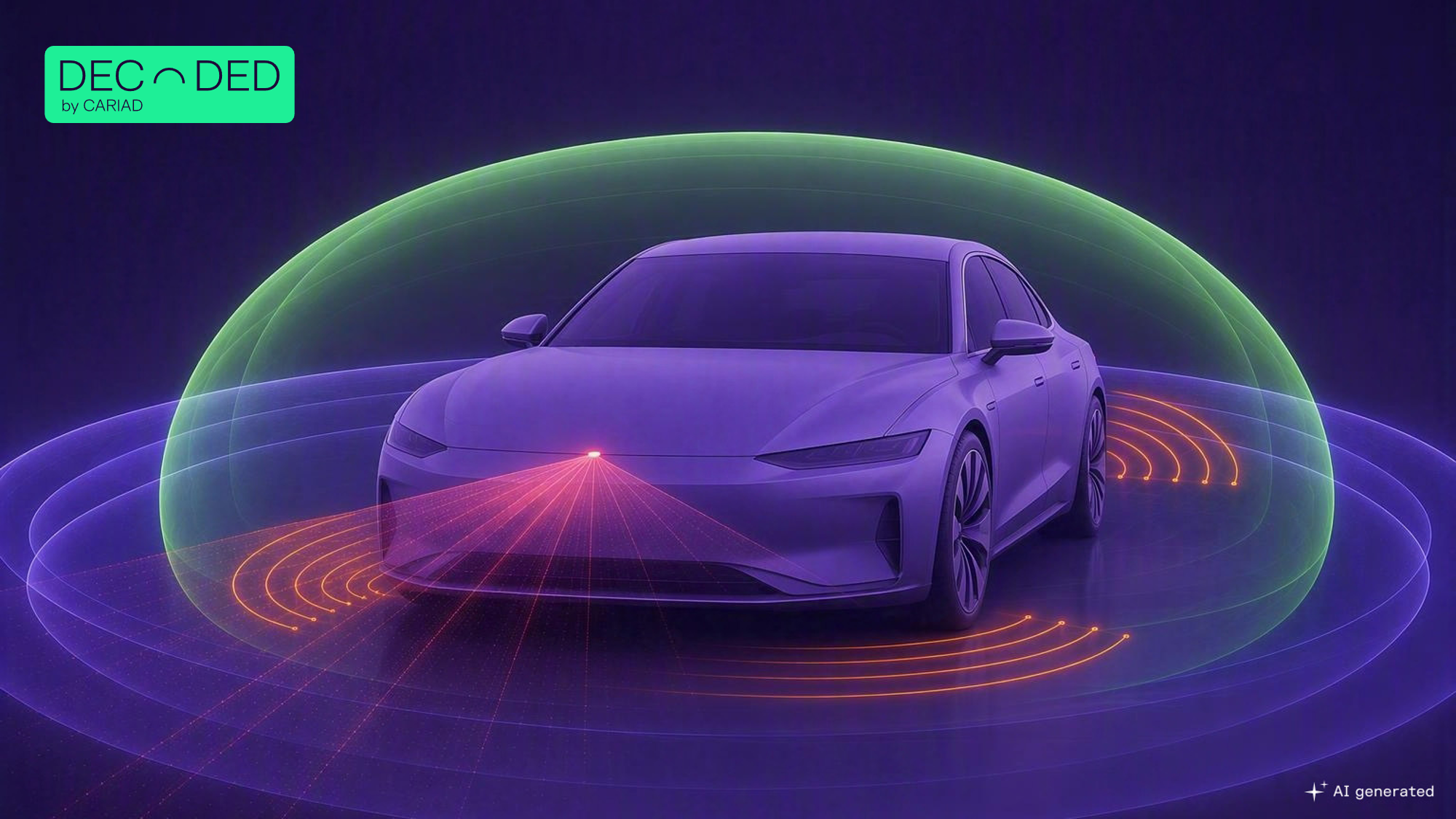 No single sensor sees it all. Discover why automated driving relies on multiple perspectives.09/09/2026
 -
Germany's hottest streets 2026
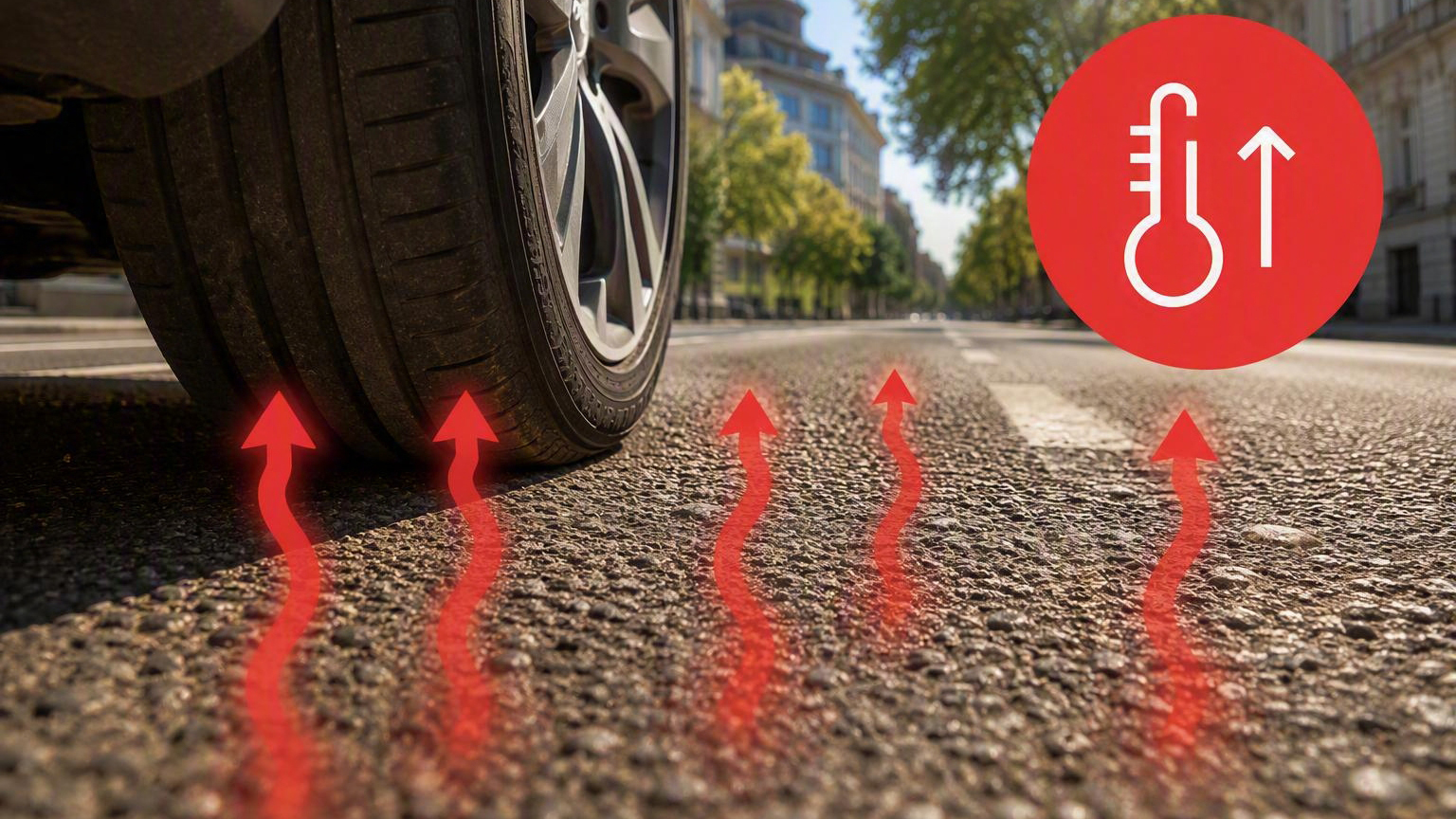 Last time, the fleet data showed which city runs hottest. Now the same sensors ask the sharper question: which street?01/09/2026
 -
Germany's heat map: What are the hottest cities in the summer of 2026?
 Connected vehicle data reveals local heat distribution across Germany. Freiburg leads while the Rhine-Ruhr region warms fastest.26/08/2026