
From China's city streets to series production
CARIZON’s new Level 2++ system brings locally developed, AI-powered driver assistance to seven new energy vehicle models in China.
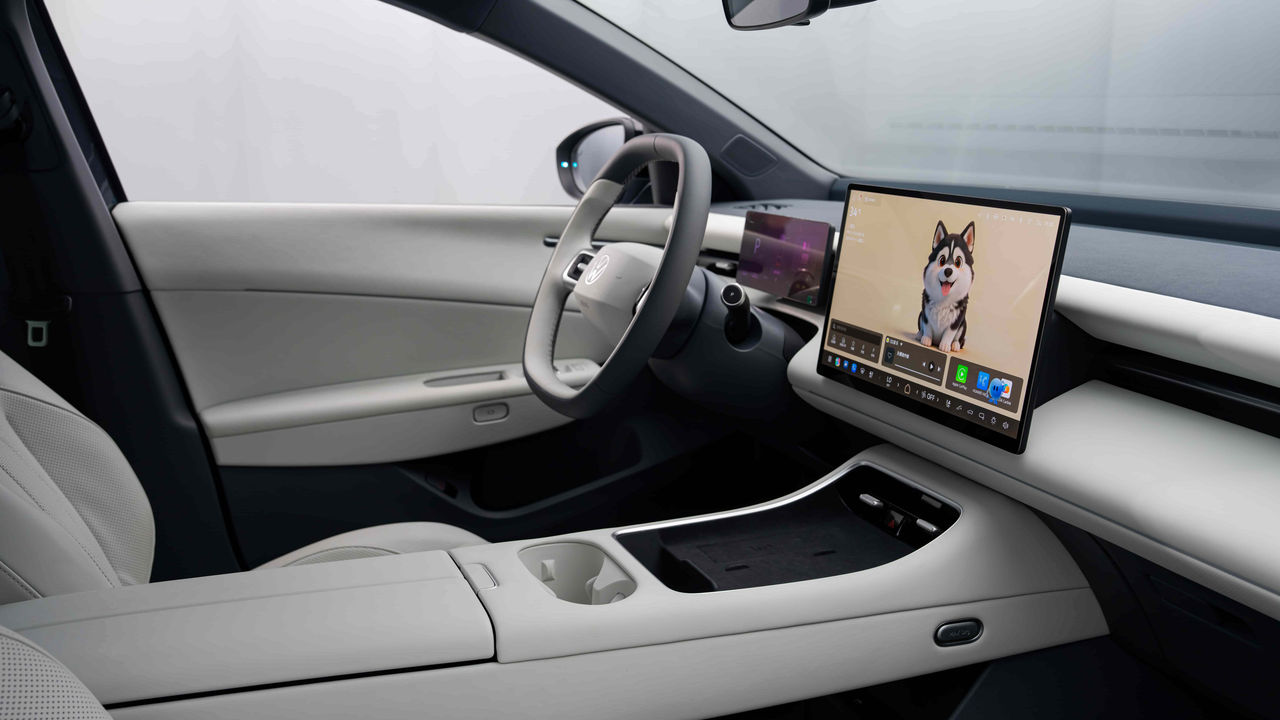
City driving rarely follows a script. A scooter enters the lane, road markings fade, traffic lights compete for attention, and a delivery van stops without warning. Driver assistance in this environment needs more than fast perception. It must understand the situation, decide and act smoothly, while keeping the driver in control.
That is the challenge behind HS8, also known as Hyper Sense 8. Developed by CARIZON, CARIAD’s joint venture with Horizon Robotics, it is the Volkswagen Group’s first in-house full-scenario Level 2++ advanced driver assistance system for the Chinese market. The first vehicles equipped with the technology are entering the market this year.

AI that turns complex traffic into clear decisions
At the core of HS8 is CARIZON’s Hyper Sense AI model. It combines perception and decision-making in one end-to-end system. Instead of processing every part of a driving situation in isolation, the model learns how traffic scenes develop and how the vehicle should respond. In real-world driving conditions, it can make decisions in under 0.16 seconds.
The model is trained and tested with GAIA 2.0, CARIZON’s data and simulation platform. It creates a wide range of virtual traffic situations, including rare scenarios that are difficult or unsafe to reproduce on public roads. This allows engineers to train the system across up to 30 million simulated driving scenarios and refine its responses before they reach customers.
The result is designed to feel natural and predictable. HS8 supports Urban Navigate on Autopilot, or Urban NoA, guiding vehicles through complex city environments and along highways. It can assist with tasks such as turns, merges, intersections and lane changes. As a Level 2++ system, it always remains driver supervised. The driver stays responsible and must be ready to intervene.
Developed in China, built for Chinese roads
HS8 reflects an “In China, for China” development approach. Its software has been created and validated for the road conditions, traffic patterns and customer expectations found in one of the world’s most dynamic automotive markets. Local development also connects the technology more closely with vehicle projects and series-production requirements.
“Intelligent driving is becoming one of the key differentiators in China’s automotive market. That’s why we founded CARIZON, our joint venture with Horizon Robotics, to develop advanced driver assistance systems specifically for Chinese customers. At the core of Hyper Sense 8 is CARIZON’s Hyper Sense AI model, which combines perception and decision-making in a single end-to-end system.”, Peter Bosch, CEO of CARIAD
CARIZON combines its own software development and system integration with Horizon Robotics’ AI models and Journey 6-series computing hardware. This approach gives the development team control over the technology from model training to its integration in individual vehicles. It also supports two configurations: a camera-based solution and a version that adds LiDAR for models with different technical and product requirements.

Seven models, one scalable technology base
The rollout starts with the ID. ERA 5S from SAIC Volkswagen. It uses the camera-based version of HS8 without LiDAR. The Jetta M6 will follow. The first LiDAR-equipped model will be the ID. AURA T6 from FAW-Volkswagen, which is also the first battery-electric vehicle. LiDAR versions of the ID. UNYX 06 and ID. UNYX 07 will also receive the system.
In total, Level 2++ technology is planned for seven new energy vehicle models across Volkswagen Group China’s joint ventures this year. From 2027, the LiDAR-based solution is set to expand to further vehicles using the China Electronic Architecture, or CEA. This scalable rollout connects locally developed assistance technology with a common electronics foundation across multiple models.
For drivers, the technology is intended to make demanding journeys feel smoother and more manageable. For developers, it creates a platform that can be trained, validated and adapted across vehicle projects. And for the Volkswagen Group, it marks the next concrete step in bringing locally developed intelligent driving technology into series production at scale.


-
DECODED: What is driving dynamics?
 The three kinds of motion behind every drive, and the software that keeps them in sync.22/09/2026
 -
DECODED: Why do modern cars need so many different sensors?
 No single sensor sees it all. Discover why automated driving relies on multiple perspectives.09/09/2026
 -
Germany's hottest streets 2026
 Last time, the fleet data showed which city runs hottest. Now the same sensors ask the sharper question: which street?01/09/2026