
Soft Stop: When software brakes physics
How CARIAD is redefining braking proving that the perfect halt is all about the code.
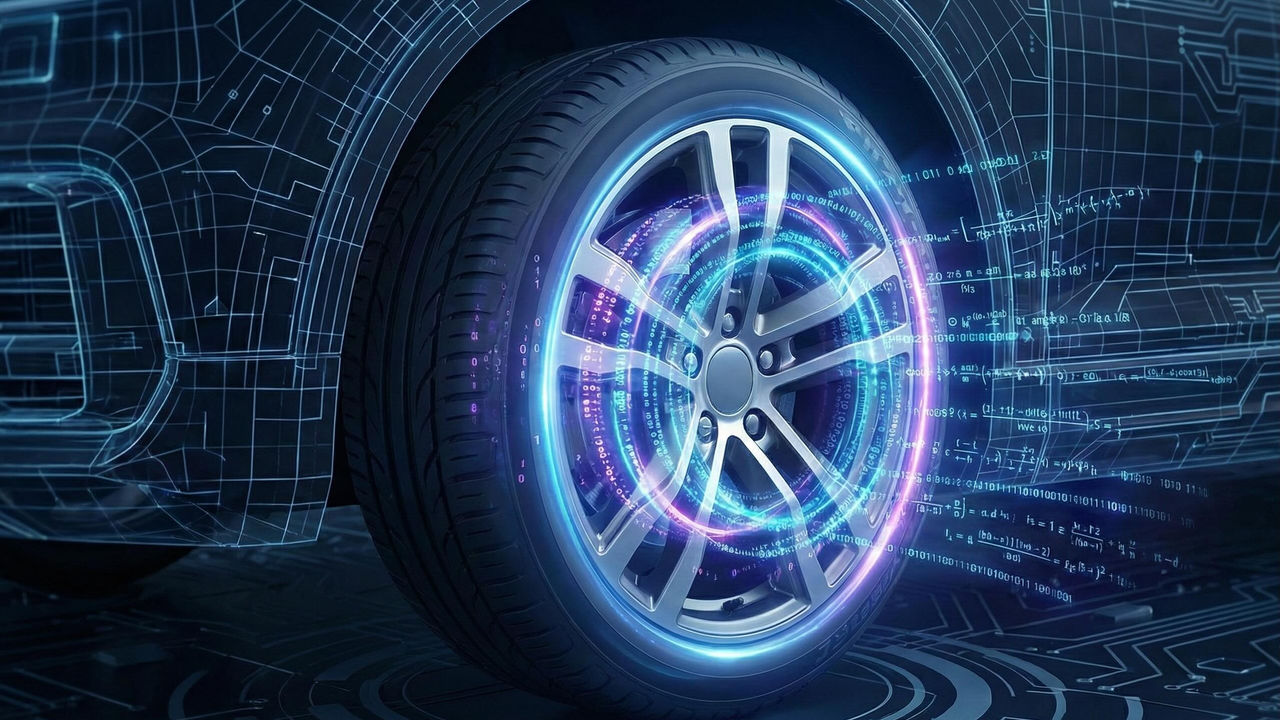
Braking is more than just deceleration - it is a central element of the driving experience. A car might accelerate beautifully, but if it jerks when stopping, the comfort is compromised. This is exactly where CARIAD steps in with the Soft Stop function. The goal: The smoothest braking process in the world - no jerks, no noise, and maximum efficiency.
The end of the "Nod"
Every driver knows it: that typical, slight "nod" of the passengers' heads just before the car comes to a standstill at a traffic light.

This phenomenon isn't a driving error; it's physics. In conventional hydraulic braking systems, the foot pressure applied by the driver – roughly about 0.1 to 0.4 g-force - is transmitted directly and constantly to the braking system. The system continues to apply force regardless of whether the car is traveling at 50 km/h or is about to stop. The result: Just before standstill, the braking force is actually too high relative to the remaining speed. The kinetic energy drops abruptly to zero, the suspension compresses, and the occupants nod forward.
Translating physics into code
Soft Stop fundamentally changes this decades-old process. The function translates physical laws into intelligent code. Instead of mechanically passing the driver's request 1:1, the software reinterprets the braking command.
The magic word is "Ramping Down": The software takes over the fine dosing from the driver. It continuously and dynamically reduces the braking force just before the halt. In this process, the mechanical brake is almost entirely replaced by the electric generator (recuperation).
Lennart Weiß, Function and Concept Engineer at CARIAD, explains the logic: "Our model uses the known mass of the vehicle and the desired velocity profile. Based on this, the algorithm calculates the exact braking force required in real-time," says Weiß. "We basically ask the code: If I want to reach this speed and I know my mass, what must the force look like to achieve the desired deceleration smoothly?".
Three steps to the perfect halt
The technical implementation takes place in a three-stage process that happens in milliseconds:
- Trajectory calculation: The system analyzes three physical trajectories: force, mass, and velocity, creating an ideal braking curve.
- Model adjustment: The algorithm considers external factors such as inclines or declines. The model knows if the car is braking uphill or downhill and adjusts the "ramp-down curve" accordingly.
- Controller fine-tuning: A controller continuously compares the theoretical model assumptions with the vehicle's real sensor data. It ensures the car stops exactly where it should, doesn't roll back, and that the driver never feels "over-regulated".
The result is a premium feeling: No jerking and no creaking of the brakes, as the process is primarily electric.
High-Performance computing as the enabler
This is enabled by the E³ 1.2 electronic architecture and a dedicated High-Performance Computer for motion & chassis.
Previously, powertrain, braking, and steering functions were often distributed across different control units. Today, these driving dynamics functions converge centrally on a High-Performance Computer. This "supercomputer" takes full control of longitudinal and lateral dynamics.

The advantages of this high integration are crucial for Soft Stop
- Short signal paths: Since the software stacks are developed in-house at CARIAD and run on a central computer, communication between components is extremely fast.
- Precise control: The power electronics (PWR) can provide the current for the electric braking torque with millisecond precision, based on commands from the dedicated High-Performance Computer.
Conclusion: Driving dynamics in the digital age
Soft Stop is a prime example of how the Volkswagen Group is transferring its historical core competence - driving dynamics - into the digital age. Through close collaboration between teams from chassis, power electronics, and software development, functions are created that combine comfort and efficiency.
Performance no longer flows just through hydraulic lines, but directly onto the road as code. The car doesn't just brake - it computes the standstill.


-
DECODED: What is driving dynamics?
 The three kinds of motion behind every drive, and the software that keeps them in sync.22/09/2026
 -
DECODED: Why do modern cars need so many different sensors?
 No single sensor sees it all. Discover why automated driving relies on multiple perspectives.09/09/2026
 -
Germany's hottest streets 2026
 Last time, the fleet data showed which city runs hottest. Now the same sensors ask the sharper question: which street?01/09/2026