
See what the car sees: Inside CARIAD's next-gen environmental UI
Modern driver assistance systems are rapidly evolving. They are no longer just reactive tools but intelligent companions that help drivers understand complex traffic situations in real time. Audi’s implementation of the Integrated Driver Assistance Display (IFA) is a prime example of this evolution.
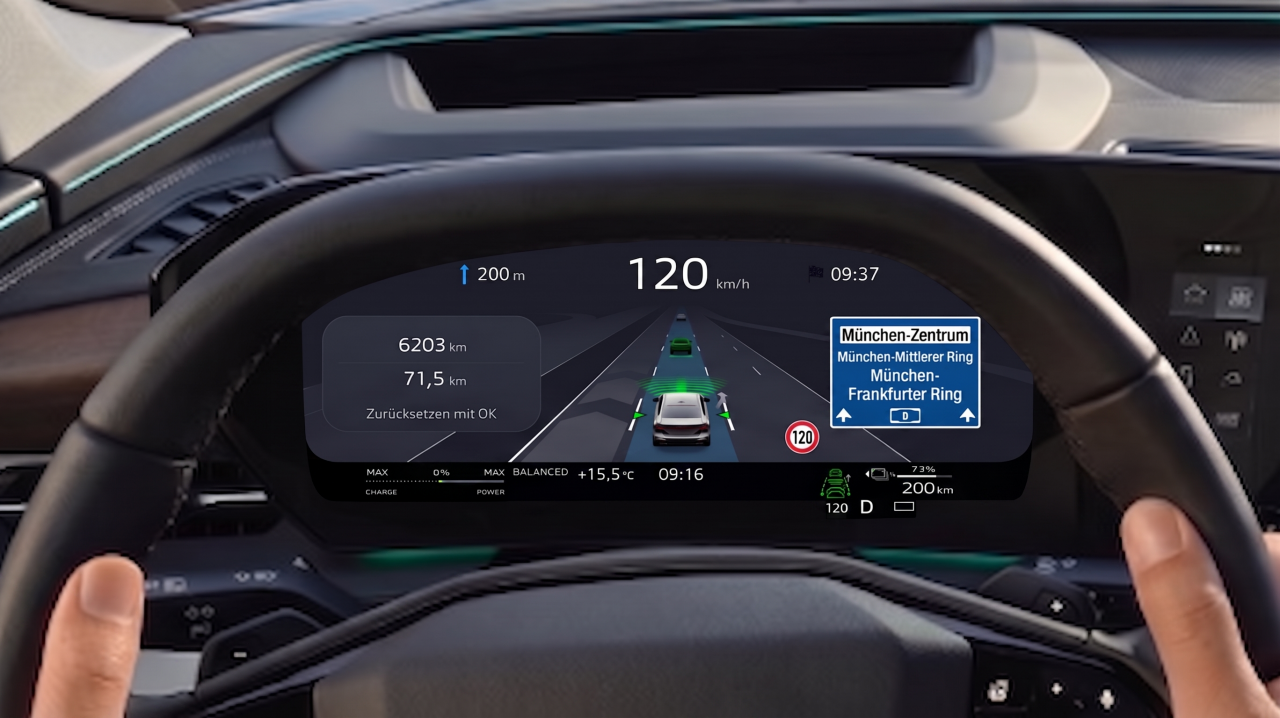
Modern driver assistance systems are no longer just reactive tools but intelligent companions that help drivers understand complex traffic situations in real time. Audi’s Integrated Driver Assistance Display (IFA) is a prime example of this evolution.
Developed by CARIAD and integrated into Audi’s vehicles, IFA transforms sensor and map data into a precise, intuitive environmental visualization shown directly in the vehicle’s cockpit.
IFA activates automatically at the start of the ride and cannot be disabled by the driver. This ensures consistent support from the moment the vehicle moves.
At the heart of IFA are two complementary functional modes: IFA LOW and IFA HIGH.
IFA HIGH – A map‑based, highly detailed view of the road ahead
IFA HIGH is the extended visualization mode. It uses map data to render a detailed digital representation of the road infrastructure, including lane geometries, road layouts, lane markings, and object positions. Through sophisticated sensor fusion, the system creates a highly accurate, stable model of the environment.
This mode is primarily active on major roads, where the quality of map data is highest. IFA HIGH in Germany, this means highways, A-roads and federal roads. The map foundation also enables an integrated navigation view: instead of traditional arrows, the Audi car displays a navigation “carpet” – a highlighted path that flows along the correct lane. Especially on multi‑lane roads or at complex junctions, this feature gives drivers unmistakably clear guidance.
When map quality decreases, the system automatically changes to the sensor‑based LOW mode via a smooth fade‑out effect.
“The automatic transition between HIGH and LOW mode is governed by map‑quality confidence metrics. If localization uncertainty passes a defined threshold, the system fades into the sensor‑driven mode to maintain accuracy. This adaptive fallback logic is important as it makes sure the driver always sees an accurate view of the surroundings, no matter the situation.”, explains Christian Fantino, Product Owner for IFA at CARIAD.
IFA LOW – The sensor‑driven real‑time mode
IFA LOW relies entirely on the vehicle’s onboard sensors and cameras. This makes the visualization extremely responsive to real‑time road conditions. It displays detected lanes, surrounding vehicles, and objects within a range of approximately 200 meters.
Because the system uses live sensor data, IFA LOW can display elements that are not part of the map – for example, the shoulder lane.
Without map‑based localization, IFA LOW does not provide navigation features. It remains a streamlined but accurate visualization of lane markings, cars, trucks, motorcycles, and bicycles. It is an ideal fallback option whenever map data is insufficient.
Seamless integration into Audi’s cockpit
Both IFA modes are shown in the Audi Digital Cockpit behind the steering wheel and the head‑up display, which projects key information directly into the driver’s field of view. Audi uses this interface to visualize the driver’s own vehicle and surrounding traffic. It also shows the status of assistance features such as adaptive cruise control, traffic sign recognition, and active lane changes.
The navigation‑carpet feature, i.e. the highlighted path along the correct lane, is available in Audi vehicles, proofing the brand’s focus on clear, intuitive lane‑level guidance.
Inside the technology stack
The IFA feature is developed by CARIAD, implemented by Audi, and experienced by the brand’s customers. The technology relies on advanced core components:
- GPS‑based localization of the driver’s own car combined with sensor fusion
- Predictive Route Data (PRD) providing information about curvature, topology, speed limits, and upcoming road sections
- Maps with Functional Road Class information
- A software architecture developed jointly by CARIAD and its subsidiary Venteq (formerly known as Intenta Automotive). CARIAD has been responsible for overall project governance, parametrization, testing, maintenance, and optimization, while Venteq has delivered crucial software elements.
For the driver: Clarity, safety and ease
Drivers benefit from precise lane‑level guidance and a highly intuitive understanding of the vehicle’s surroundings. The navigation carpet removes ambiguity in complex traffic situations and highlights the correct lane even on multi‑lane highways. When driving manually, visualizing the distance to the vehicle in front is also part of the IFA.

IFA alerts drivers when lane changes are unsafe – for example due to overtaking traffic – and shows clearly how it behaves, so drivers always understand what the assistant is doing and why.
The result is a smoother, safer, and more confident driving experience.
The next steps in environmental visualization
Future IFA releases will also show pedestrians, cyclists, rail networks, level crossings, and oncoming traffic.
This reflects Audi’s ambition – in cooperation with CARIAD – to deliver a comprehensive, high‑precision real‑time digital twin of the driving environment. This paves the way for future assistance and automated driving systems.
Integrated Driver Assistance Display is available across all Audi models including A5, Q5, A6, A6 e-tron und Q6 e-tron, Q7, and Q9. Porsche will also offer the feature in a limited version in its Cayenne and Macan models.


-
DECODED: What is driving dynamics?
 The three kinds of motion behind every drive, and the software that keeps them in sync.22/09/2026
 -
DECODED: Why do modern cars need so many different sensors?
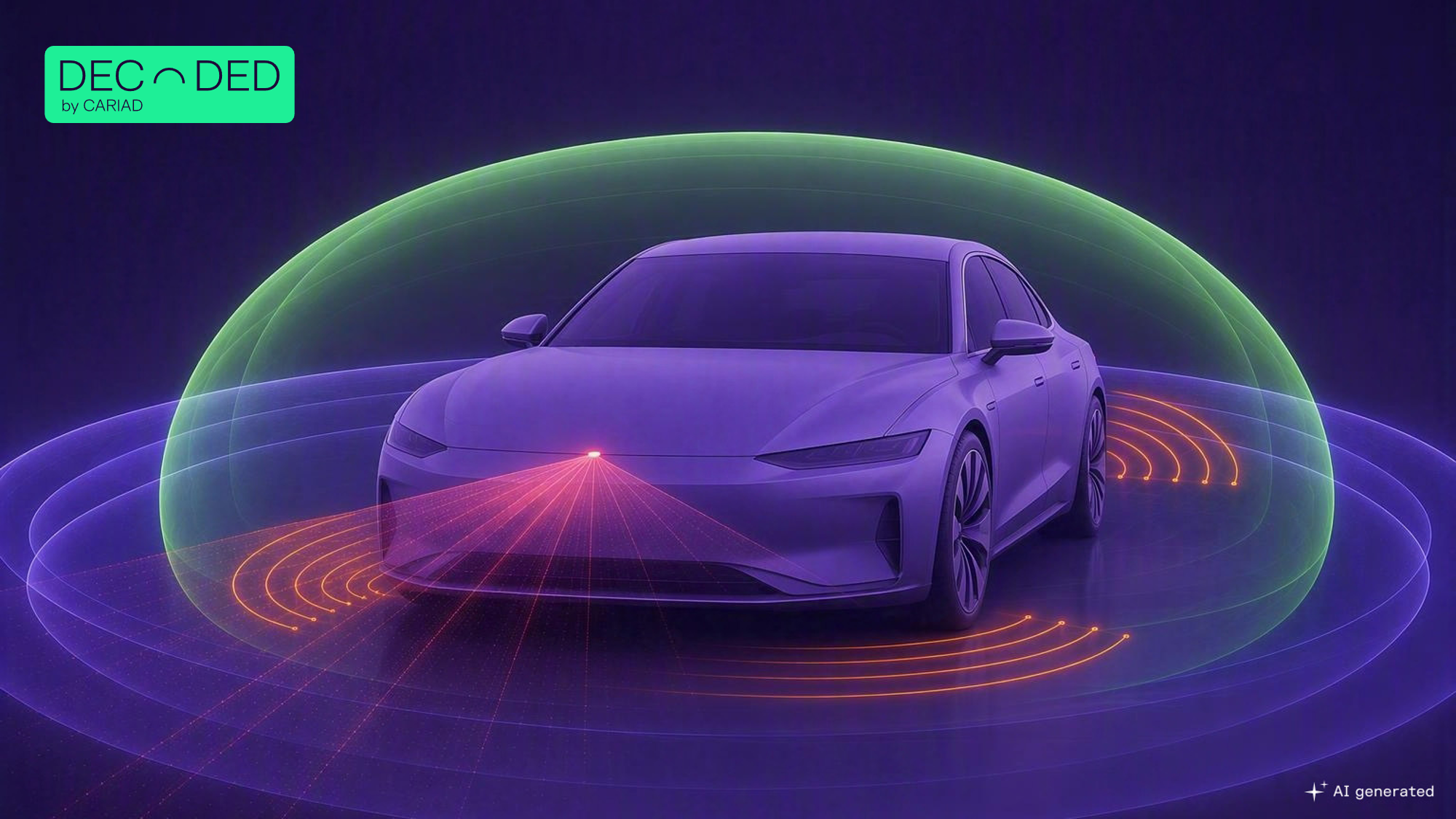 No single sensor sees it all. Discover why automated driving relies on multiple perspectives.09/09/2026
 -
Germany's hottest streets 2026
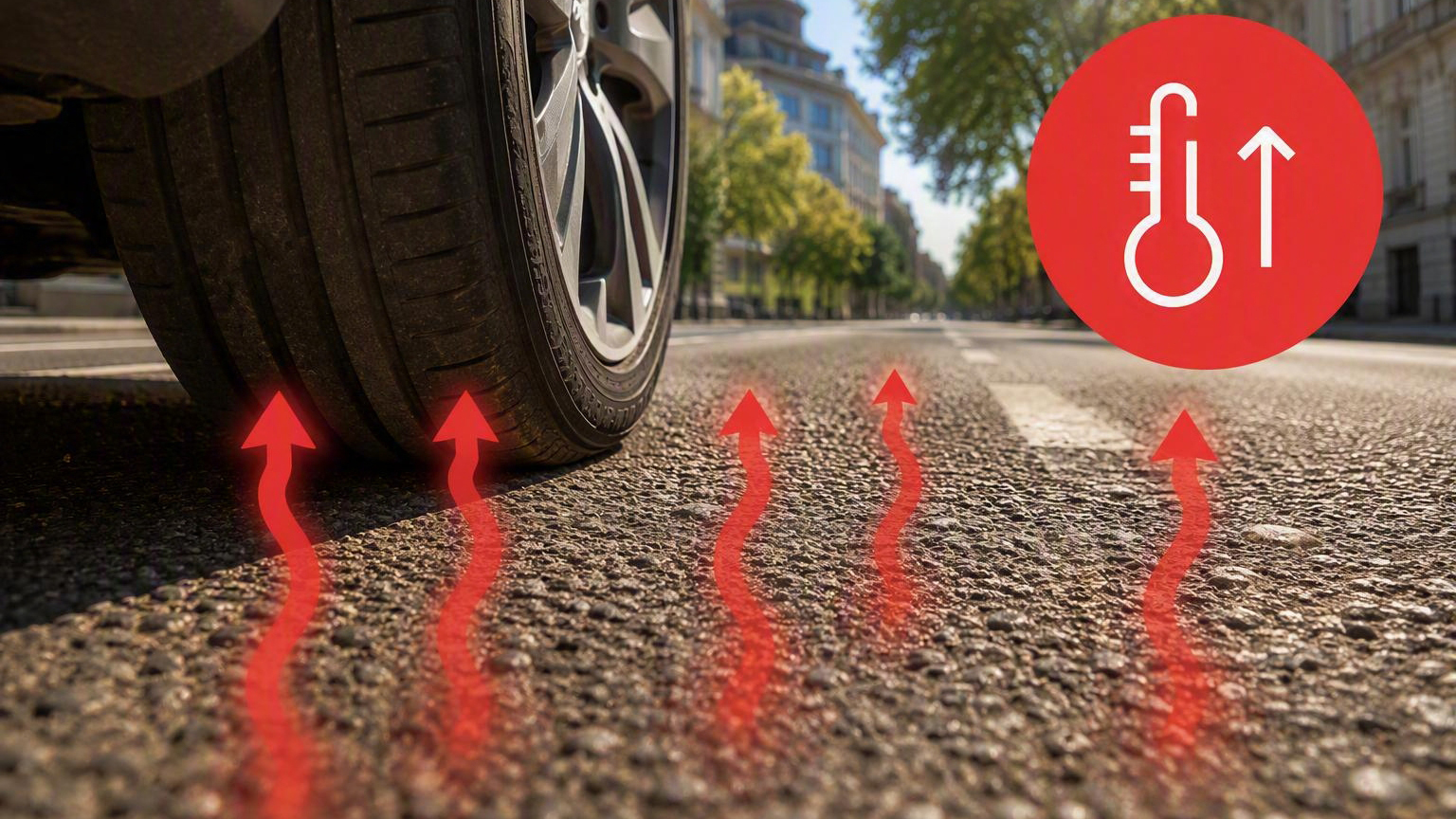 Last time, the fleet data showed which city runs hottest. Now the same sensors ask the sharper question: which street?01/09/2026