
How CARIAD's adaptive algorithm makes driving modes smarter
Driving modes – next level: In close collaboration, teams from CARIAD and Audi have developed a new feature which leverages an intelligent algorithm to analyze road types and driving situations in real time – and selects the optimal driving mode based on this.
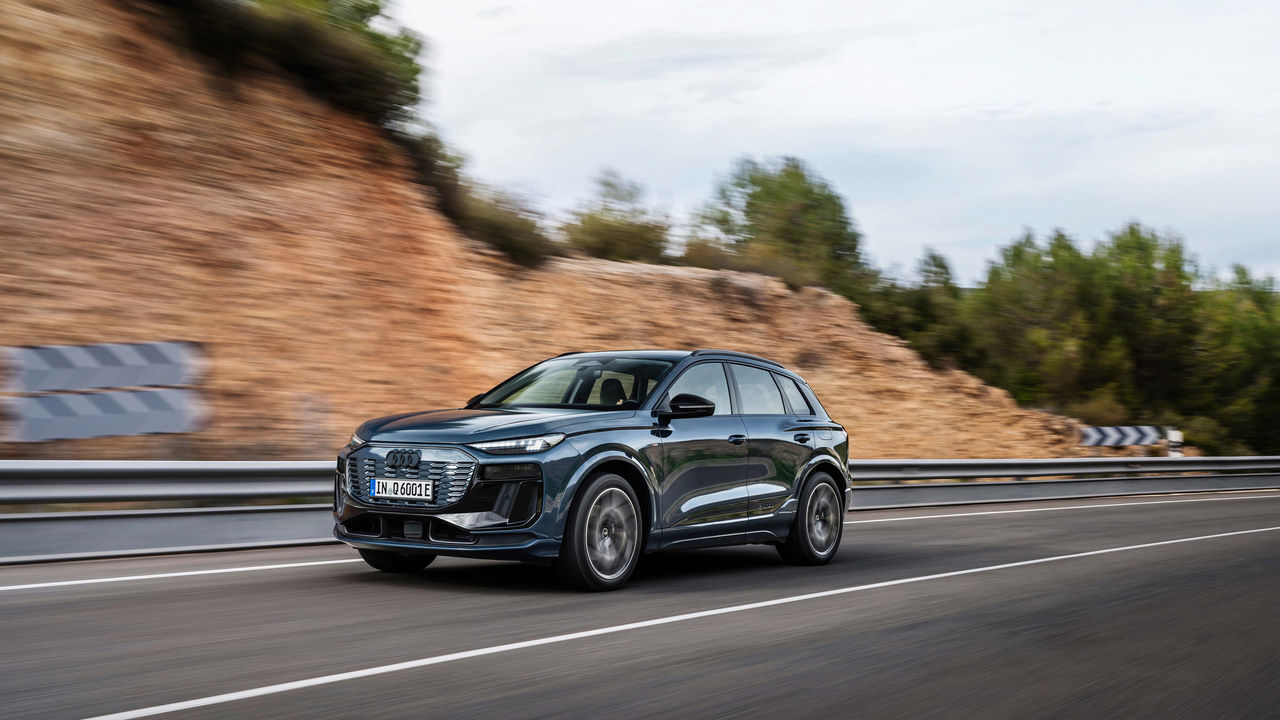
Comfort, balanced, dynamic or the efficiency driving mode? In many vehicles of the Volkswagen Group, drivers can adapt their car to their driving preferences and needs. Choosing a mode changes the characteristics of key drivetrain and chassis systems – from comfort‑focused to distinctly dynamic or especially energy‑efficient.
“At CARIAD, we have developed a new mode that automatically selects the best option from the available driving modes upon activation, based on the road type and specific driving situations," explains David Reitze, Product Manager at CARIAD.
Orchestration of functions
From a technical perspective, a driving mode orchestrates a wide range of functions – including, for example, steering ratio, damper control, transmission, vehicle dynamics systems, accelerator pedal response, or even climate control settings. In vehicles equipped with the E3 1.2 electronics architecture, more than 45 functions are now coordinated for a single driving mode. These can be parameterized in such a way that the vehicle drives more sporty, more comfortable, or more efficiently.
Audi is the first brand in the Volkswagen Group to offer the new driving mode with the name "Audi drive select assistant" in the A5, Q5, A6, A6 e‑tron, and Q6 e‑tron models.
Technology makes the difference
In which scenarios does the comfort function assist? Today, millions of drivers can consciously choose a mode and select it with just a few clicks. "But even though many modes are available, in everyday driving it is usually the preset ‘balanced’ mode that drivers use," explains Thomas Heseler, developer at Audi. "With the ‘Audi drive select assistant’, we break this logic. Instead of the driver manually selecting modes, our system chooses the appropriate configuration for the current driving situation – without the driver having to take any action."
To achieve this, the software uses map data to determine the road category along the route the vehicle is most likely to take (Most Probable Path). "If this route, for example, leads onto a highway, the vehicle switches into dynamic mode already 30 meters before entering the ramp. This way, the full potential of the car is available right from the start," Heseler explains. Unlike predictive systems, the new mode is adaptive. This means the vehicle detects current situations and conditions and adjusts its behavior accordingly.
For the "Audi drive select assistant," the guiding principle is "action – reaction." The assistant distinguishes between road types (e.g., rural roads, highways, and urban streets) as well as direct driver events. If the system detects, for example, strong acceleration or fast cornering, it typically responds by selecting a sportier driving mode.
Technology and personality combined
The days when drivers had to choose between sport, comfort, or efficiency in the vehicle menu to change essential settings of their car are over. "The most important thing: the assisted selection of the appropriate mode always feels completely natural to drivers – so that their vehicle supports them as individuals. With our new driving mode, we create a new, personal connection between driver and vehicle, enabled by software," says David Reitze.


-
DECODED: What is driving dynamics?
 The three kinds of motion behind every drive, and the software that keeps them in sync.22/09/2026
 -
DECODED: Why do modern cars need so many different sensors?
 No single sensor sees it all. Discover why automated driving relies on multiple perspectives.09/09/2026
 -
Germany's hottest streets 2026
 Last time, the fleet data showed which city runs hottest. Now the same sensors ask the sharper question: which street?01/09/2026