
Innovation by own efforts
CARIAD exceeds 1,000 patents filed
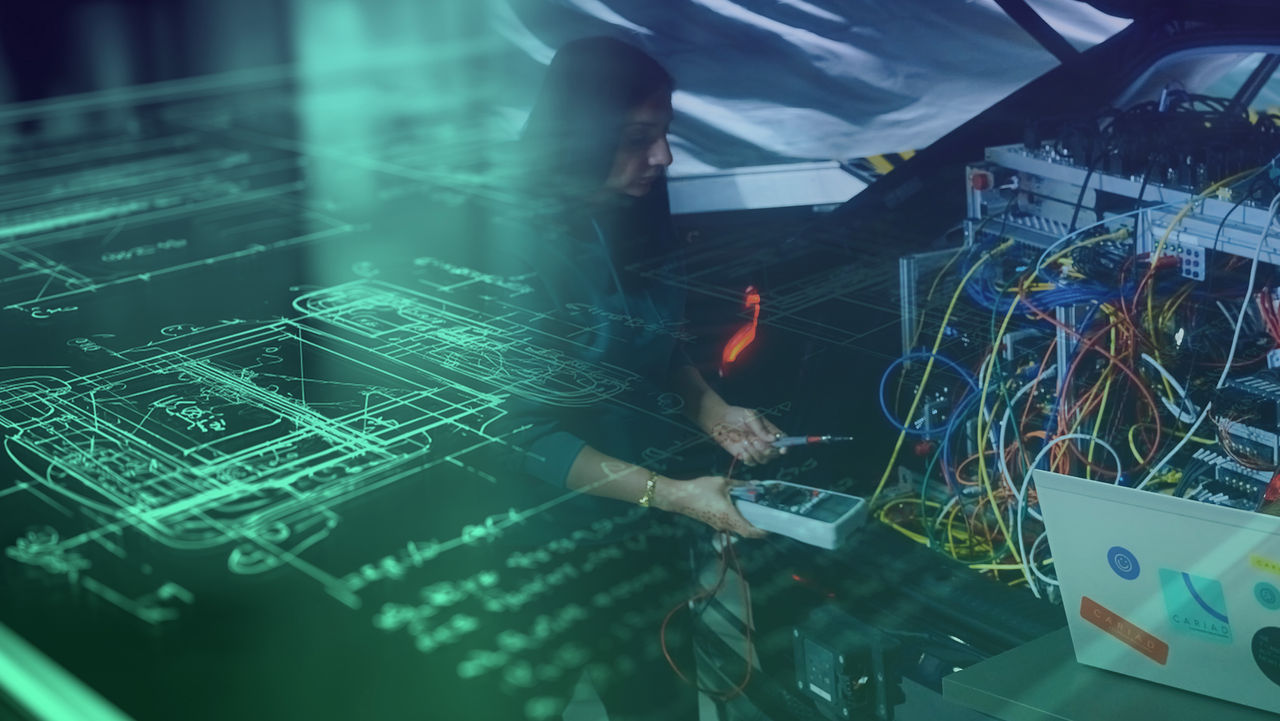
Wolfsburg, December 22, 2025 – With a record number of in-house inventions CARIAD, the automotive software company of the Volkswagen Group, is making driving safer, more comfortable and more attractive: In 2025, the thousandth patent was filed. The software company is thus proving its innovative strength from its own development in international competition.
The growing share of in-house development is also reflected in the growing number of patent applications: In 2025, the CARIAD Group recorded a 17 percent increase in newly filed patents to more than 250 worldwide – a new annual record number. The filings are for key technologies such as automated driving, digital experience, cloud & connectivity and vehicle dynamics.
The area of automated driving is particularly innovative: Here, CARIAD's coders increased the number of new patent applications by 44 percent. Within the Automated Driving Alliance, CARIAD is developing a technology stack for assisted and automated driving for large-scale production with technology partner Robert Bosch. The partners use artificial intelligence developed in-house along the entire ADAS stack.
"Software innovations for our customers from our own development create a competitive advantage. More than 1,000 patent applications in automated driving, digital experience, cloud or vehicle dynamics are an example of CARIAD's transformation," says Peter Bosch, CEO of CARIAD. "A higher proportion of in-house development not only enables us to achieve faster innovation cycles and structural cost advantages in strategic technology fields. Added value for customers is particularly important to us, which they can experience in the latest models from Volkswagen or Audi, for example. With our focus on artificial intelligence, we are laying the foundation for safe and intelligent software products for vehicles of all brands and classes of the Volkswagen Group."
From better driver assistance to compute performance optimization: patents in a wide range of technologies
CARIAD's proprietary technical innovations cover a wide range of technologies and customer-relevant functions. Within the Volkswagen Group, CARIAD is responsible for the development of scalable key technologies based on AI, software and electronic hardware that are used across brands and architectures. In addition to automated driving, this also includes the digital experience in and around the vehicle, cloud and connectivity functions as well as driving dynamics.
One example of a patented technology in automated driving is the reliable detection of so-called "ghost features". These are objects such as advertising posters or other visual elements that resemble traffic signs or road markings but are irrelevant to driving behavior. The technology recognizes such objects based on AI, for example considering driver reactions or by plausibility checks with other vehicle information, and marks them as to be ignored. This avoids misinterpretations – such as incorrect traffic sign recognition or unnecessary reactions to supposed obstacles.
Another patent addresses the detection of road widening. Thanks to the intelligent combination of swarm data and the vehicle's own sensor data, the system detects at an early stage when a lane widens and merges into several lanes. The vehicle can anticipate this situation and move into the right lane with foresight and evenly. Customers can experience this directly: instead of changing lanes late and abruptly, the vehicle enters the new lane calmly and smoothly.
Both innovations are already in use in series production, including in the Travel Assist of the ID. family.
Another patented technology noticeably increases system performance in real-time systems and thus directly increases the driving experience. A real-time computing system records the status of sensors and actuators and intelligently coordinates with the high-performance computing system (HPC). As a result, the HPC is interrupted less often by short-term events and can use computing power specifically where it is needed. For customers, this means that assistance and comfort functions react faster and more stably, driving maneuvers are executed more smoothly and the overall system works more reliably.


-
Germany's heat map: What are the hottest cities in the summer of 2026?
 Connected vehicle data reveals local heat distribution across Germany. Freiburg leads while the Rhine-Ruhr region warms fastest.26/08/2026
 -
The car that gives everyone their own weather
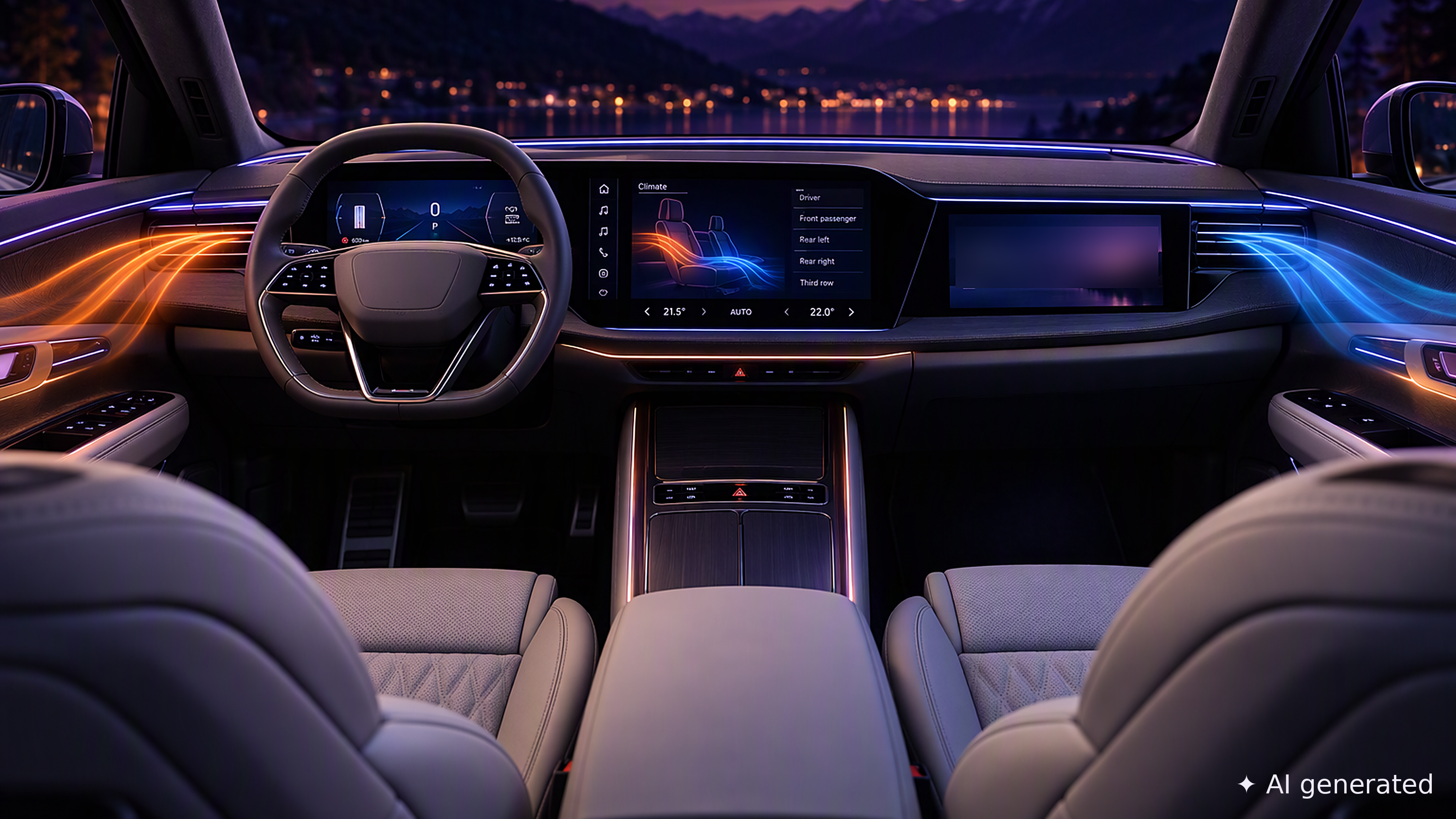 Five zones share one climate unit in the Audi Q9. Here is how the software keeps the driver cool, the kids warm and the third row in the game.19/10/2026
 -
CARIAD is evolving into an AI company
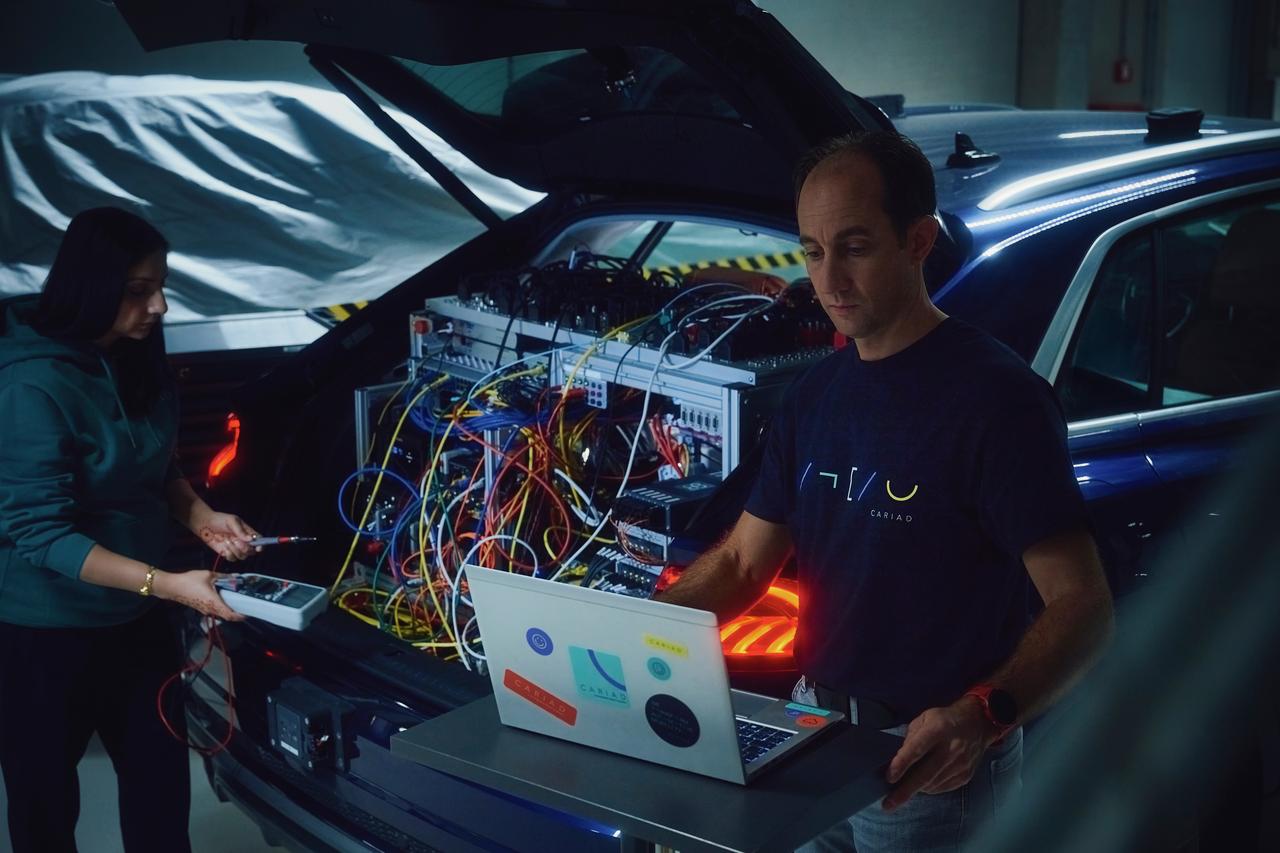 Leaner, faster and built to compete.02/10/2026